Introduction: Moving beyond the "Black Box"
Most people treat AI as a black box: you send a prompt, and you hope for a good result. But for a business in a regulated environment like Frankfurt, "hope" is not a strategy. As I transition into the role of an AI Solution Architect, my focus is not just on using AI, but on engineering its behavior.
The future isn't just about bigger models; it's about Agentic Workflows.
The Core Difference: Zero-Shot vs. Iterative Design
Most users are familiar with "Zero-Shot" prompting—asking a question and getting one answer. However, for complex professional tasks, this often leads to hallucinations. An Agentic Workflow changes the game by introducing Reasoning Loops:
-
Task Decomposition: Breaking a complex request into manageable sub-tasks.
-
Tool Integration: Allowing the model to interact with external data sources or APIs to verify facts before answering.
-
Self-Reflection: A secondary "critic" process that reviews the output against the original requirements.
Why Design Matters More Than the Model
Whether using Gemini, GPT, or Claude, the model is just the "engine." The Workflow is the "transmission" that puts that power to the ground. In my current research and path toward GCP Certification (Path 118), I am focusing on building systems that are:
-
Predictable: Ensuring the AI follows a specific logical path.
-
Transparent: Maintaining logs of every "thought" and "action" the agent takes.
-
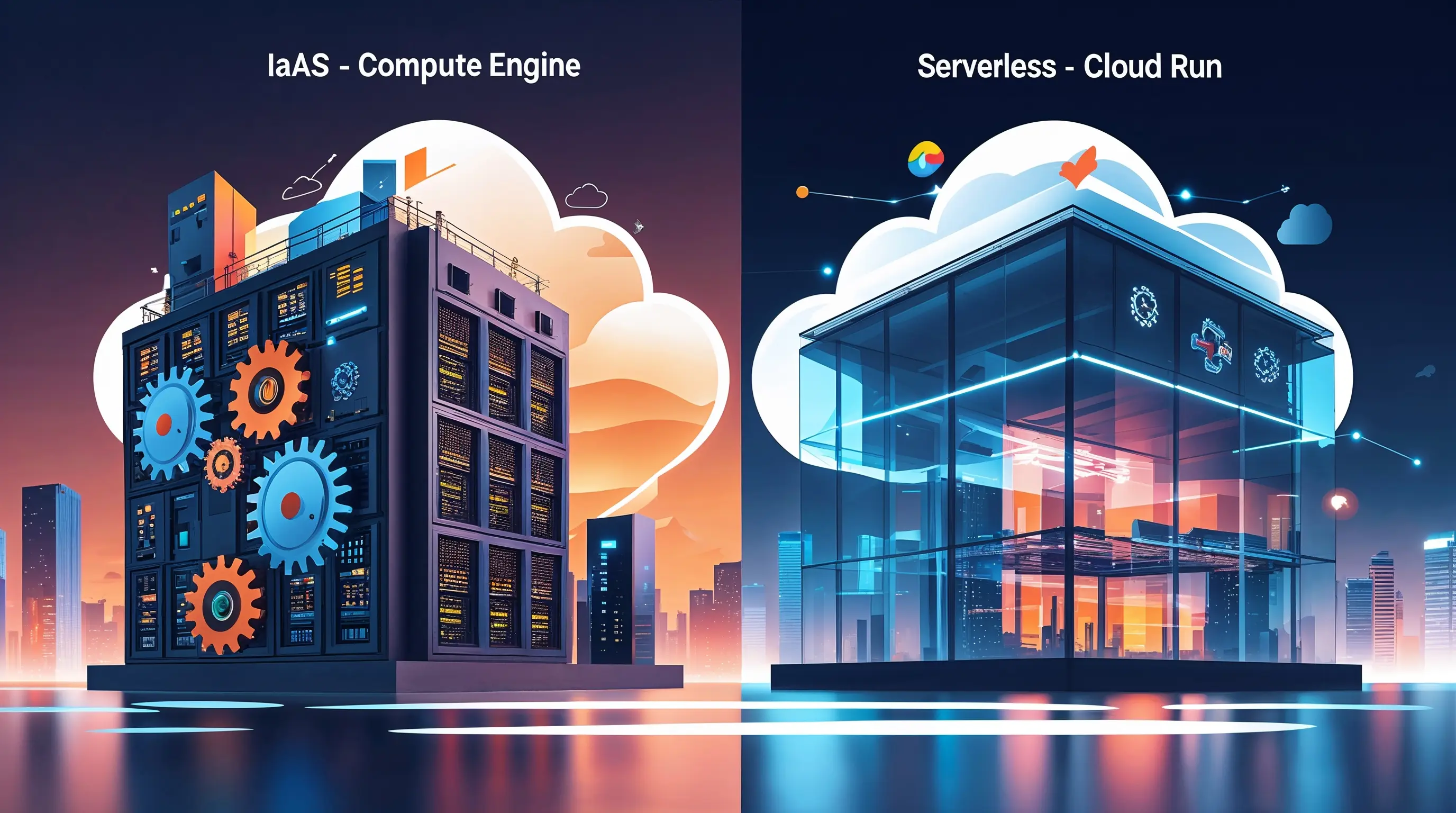
Scalable: Leveraging Cloud Run and Vertex AI to handle enterprise workloads without managing underlying servers.
The Role of the AI Architect in 2026
n the Frankfurt tech landscape, the value of an Architect lies in Governance. It’s about deciding when an agent should have autonomy and when it must hand over the task to a human expert.
I am currently focusing my development on Agentic Design Patterns, such as Reflection, Planning, and Multi-agent Collaboration. These patterns allow us to build systems that don't just "chat," but actually solve multi-step problems with a high degree of reliability.
Conclusion: Planning for the Agentic Era We are at the beginning of a shift where AI will move from a passive assistant to an active collaborator. My goal for 2026 is to bridge the gap between "experimental AI" and "production-ready systems."
The infrastructure is ready (Cloud Run), the models are powerful (Gemini), and the methodology (Agentic Workflows) is the final piece of the puzzle.